





Signed up for a climbing course with a local guide company? Before you show up without the right gear, let us help you arrive fully prepared. Most guide companies will provide a gear list ahead of your course—and our expert staff are here to help you get the most out of your day. Whether you're starting from scratch or filling in gaps in your gear closet, we've got you covered.
In this article, we'll walk you through the standard gear you'll need for most courses. We've connected with local guide companies to compile a comprehensive list of recommended gear. You or one of our shop staff can pull up this list from our website to help guide your shopping experience.
While each guide and company may have their preferences, the essentials generally fall into a few key categories. We've linked to each of these gear groups so you can easily browse ahead of time and feel confident heading into your course.
The Basics
Personal gear is required for every guided course. While this list isn't specific to any one course, it forms the foundation for any day out climbing. Make sure you have these essentials:
- Climbing Harness - Choose a harness that suits your climbing style (trad, sport, alpine, etc.) and fits your body properly.
- Rock Shoes - Match the shoes to your climbing style (crack, face, etc.) and ensure they're snug but comfortable.
- Approach Shoes - Sturdy footwear makes getting to the crag easier and safer.
- Helmet - Must be properly fitted for safety.
- Chalk Bag + Chalk - Helps keep your hands dry and improves grip.
- Pack - A 35-50 litre pack is ideal for carrying your gear.
- Men's Apparel / Women's Apparel - Dress in layers suitable for varying weather conditions—be prepared for both rain and shine.
- Personal Effects - Bring water (plus a bottle or bladder), snacks or meals, sun protection (hat, sunscreen), any necessary medications, and a basic first aid kit.
ROCK COURSES
1. Introduction to Rock Climbing Course
First time out on the rock? Start with the basic gear list above, and add the following items:
- 1 x Rope - Single, dynamic, 60m or 70m. Optional: dry-treated and with a middle marker.
- 4 x Non-locking Carabiners - Straight-gate or wire-gate (avoid bent-gate carabiners for anchors setups).
- 1 x Locking Carabiner - HMS (round stock preferred).
- 1 x Classic Tubular Belay Device - Preferably with an auto-blocking guide mode.
- 1 x Cordelette - 7mm x 5m (ideally 3mm smaller in diameter than your rope).

2. Top Rope Anchors Course
The next course teaches you how to build your own anchors so you can safely climb with friends. Bring the basics gear list, plus the following:
- 1 x Rope - Single, dynamic, 60m or 70m. Optional: dry-treated and with a middle marker.
- 8 x Locking Carabiners - 2 HMS (round stock) and 6 D-shaped.
- 8 x Non-locking Carabiners - 4 straight-gate or wire-gate, 4 bent-gate.
- 2 x Classic Tubular Belay Devices - Preferably with an auto-blocking guide mode.
- 2 x Cordelettes - 7mm x 5m (ideally 3mm smaller in diameter than your rope).
- 2 x Personal Prusiks - Made from 7mm cord (1.5m), or pre-sewn (like Hollow Blocks).
- 2 x 120cm Nylon Slings
- 2 x 120cm Dyneema Slings

3. Sport Climbing Course
Sport climbing allows you to push your limits, build endurance, strength and movement skills, whilst clipping into permanently fixed bolts in the rock to keep you safe on your ascent. For single-pitch sport climbing courses, bring the basics gear list above, plus the following:
- 1 x Rope - Single, dynamic, 60m or 70m. Optional: dry-treated and with a middle marker.
- 4 x Locking Carabiners - 2 HMS (round stock) and 2 D-shaped.
- 4 x Non-locking Carabiners - straight-gate or wire-gate
- 1 x Classic Tubular Belay Device - Preferably with an auto-blocking guide mode.
- 1 x GriGri - GriGri, GriGri+ or Neox
- 1 x 120cm Nylon Sling
- 1 x 120cm Dyneema Slings
- 10 x Quickdraws - Sport-specific draws with wider dog bones
- 1 x Stick Clip (optional)

4. Sport Multi-Pitch Skills Course
Building off sport climbing is a set of skills allowing you to head up the walls with bolts and bolt anchors. Knowing these skills open doors to longer routes. Bring the basics gear list above, plus the following:
- 1 x Rope - Single, dynamic, 60m or 70m. Optional: dry-treated and with a middle marker.
- 8 x Locking Carabiners - 2 HMS (round stock) and 6 D-shaped.
- 8 x Non-locking Carabiners - 4 straight-gate or wire-gate, 4 bent-gate.
- 2 x Belay Devices with an auto-blocking guide mode.
- 2 Personal Prusiks - Made from 7mm cord (1.5m), or pre-sewn (like Hollow Blocks).
- 2 x 120cm Nylon Sling
- 2 x 120cm Dyneema Slings
- 10 x Quickdraws - Sport-specific draws with wider dog bones
- 1 x Small Climbing Pack - 15 litres with waistband

5. Traditional Lead Climbing Course
Learning to place natural protection—typically cams and nuts—in Squamish, while assessing the quality of gear placements, allows climbers to safely ascend routes without bolts by following crack systems commonly found in most rock formations, especially in Squamish. Bring the basics gear list above, plus the following:
- 1 x Rope - Single, dynamic, 60m or 70m. Optional: dry-treated and with a middle marker.
- 4 x Locking Carabiners - 2 HMS (round stock) and 2 D-shaped.
- 4 x Non-locking Carabiners - straight-gate or wire-gate
- 1 x Classic Tubular Belay Device - Preferably with an auto-blocking guide mode.
- 1 x 120cm Nylon Sling
- 1 x 120cm Dyneema Sling
- 4 x Alpine Quickdraws - 60cm sling plus 2 lightweight carabiners per draw
- 1 x Traditional Climbing Rack - A standard rack: Cams and Set of Nuts
-
A standard Rack (SR) of cams generally refers to a single set of cams from 10.5mm to 115mm (or 0.5” to 3.5”). This covers thin fingers to fists, or a BD Z4 Yellow #0.2 to a grey Camalot C4 #4, and will allow you to protect the majority of routes in Squamish. Most climbers choose to double up cams of certain sizes.
- Crack Gloves - Sized correctly with ample hand protection

6. Traditional Multi-Pitch Skills Course
Once the art of placing gear has been learned this can be combined with multi-pitch and lead skills to open up the world of longer world-class routes. Bring the basics gear list above, plus the following:
- 1 x Rope - Single, dynamic, 60m or 70m. Optional: dry-treated and with a middle marker.
- 8 x Locking Carabiners - 2 HMS (round stock) and 6 D-shaped.
- 8 x Non-locking Carabiners - 4 straight-gate or wire-gate, 4 bent-gate.
- 2 x Belay Devices with an auto-blocking guide mode.
- 2 x Personal Prusiks - Made from 7mm cord (1.5m), or pre-sewn (like Hollow Blocks).
- 2 x 120cm Dyneema Sling
- 2 x 240cm Dyneema Sling
- 4 x Alpine Quickdraws - 60cm sling plus 2 lightweight carabiners per draw
- 1 x Traditional Climbing Rack - A standard rack: Cams and Set of Nuts
-
A standard Rack (SR) of cams generally refers to a single set of cams from 10.5mm to 115mm (or 0.5” to 3.5”). This covers thin fingers to fists, or a BD Z4 Yellow #0.2 to a grey Camalot C4 #4, and will allow you to protect the majority of routes in Squamish. Most climbers choose to double up cams of certain sizes

7. Rescue Systems Course
Things don't always go to plan—it's better to be prepared than to simply hope for the best. Learning the elements of rescue, including decision-making and rope skills, will give you a broader set of tools in case something goes wrong. Bring the basic gear listed above, along with the traditional multi-pitch gear list and a few extras
- 1 x Lightweight Progress Capture Device - toothed with a pulley
- A Lightweight Knife - Foldable and clip-able
- 2 x Cordelettes - 7mm x 5m (ideally 3mm smaller in diameter than your rope).
- 2 x Personal Prusiks - Made from 7mm cord (1.5m), or pre-sewn (like Hollow Blocks)
- 1 x Pulley - lightweight.
MOUNTAINEERING COURSES
Want to explore beyond the world of rock? Stepping into the realm of snow and ice requires a new set of skills and tools. You'll still need to bring the basics—but that list expands to cover a wider range of conditions and potential exposure to mountain weather i.e Alpine Basics which we list out below.

For a very complete breakdown including specific gear recommendations with weight for different length objectives read our “What's Your Approach” article. This is an amazingly detailed breakdown piece by piece.
Alpine Basics
Personal gear is required for every mountain course. This list is the foundation for any day out in the mountains and will increase for multi-day trips. Make sure you have these essentials:
- Climbing Harness - An alpine harness that easily goes over extra clothing and undoes to avoid going over crampons and fits your body properly.
- Mountaineering Boots - Ensure they're comfortable, supportive crampon compatible sturdy, lightweight and durable. (Technical Ice boots are different - take whatever boots is critical for you trip)
- Helmet - Must be properly fitted for safety.
Apparel (Dress in layers suitable for varying weather conditions. Be prepared for both rain and shine.)
- Men's Pants / Women's Pants - Synthetic, breathable, and lightweight
- Men's Shorts / Women's Shorts - For hot weather
- Men's Sun Hoodie / Women's Sun Hoodie - Ideal for hot weather; super breathable with SPF protection
- Men's T-shirt / Women's T-shirt - Synthetic
- Men's Long-Sleeve Shirt / Women's Long-Sleeve Shirt - Synthetic, breathable, with light insulation
- Men's Socks / Women's Socks - Synthetic and padded for hiking
- Men's Underwear / Women's Underwear - Synthetic and comfortable
- Men's Windshell / Women's Windshell - Compressible, for mild wind protection
- Men's Alpine Jacket / Women's Alpine Jacket - Waterproof and durable
- Men's Waterproof Pants / Women's Waterproof Pants - Worn as an outer layer over hiking pants
- Men's Thermal Jacket / Women's Thermal Jacket - With synthetic insulation
- Gloves - Thin, with a durable palm
- Gaiters - Check the fit with your boots
- Men's Hat / Women's Hat - A warm toque for cold days and a brimmed hat for sunny ones
- Hut Booties - If staying overnight
Optional Extras (Especially on cold days or a Technical Ice course.)
- Men's Base Layers / Women's Base Layers (Top & Bottom) - Merino wool or synthetic for moisture-wicking and warmth.
- Men's Insulated Pants / Women's Insulated Pants - Useful in cold weather or for high alpine starts/overnight trips.
- Men's Buff or Neck Gaiter / Women's Buff or Neck Gaiter -Versatile for sun, wind, or cold protection.
- Heavier Gloves or Mitts - In addition to thin gloves, bring insulated gloves or mittens for cold/wet conditions.
- Overmitts or Waterproof Shell Gloves - For wet snow or stormy alpine weather.
- Men's Belay Parka / Women's Belay Parka - For Cold Ice Belays
- Extra Men's Socks / Women's Socks - It is always good to have a backup pair in case of wet feet or for overnight warmth.
Personal Effects
Bring water (plus a bottle or bladder), snacks or meals, any necessary medications, a basic first aid kit, toothbrush, toothpaste, toilet kit, sunscreen, sunglasses, pack towel, bug spray, lighter, and sanitation.
Backcountry Camping
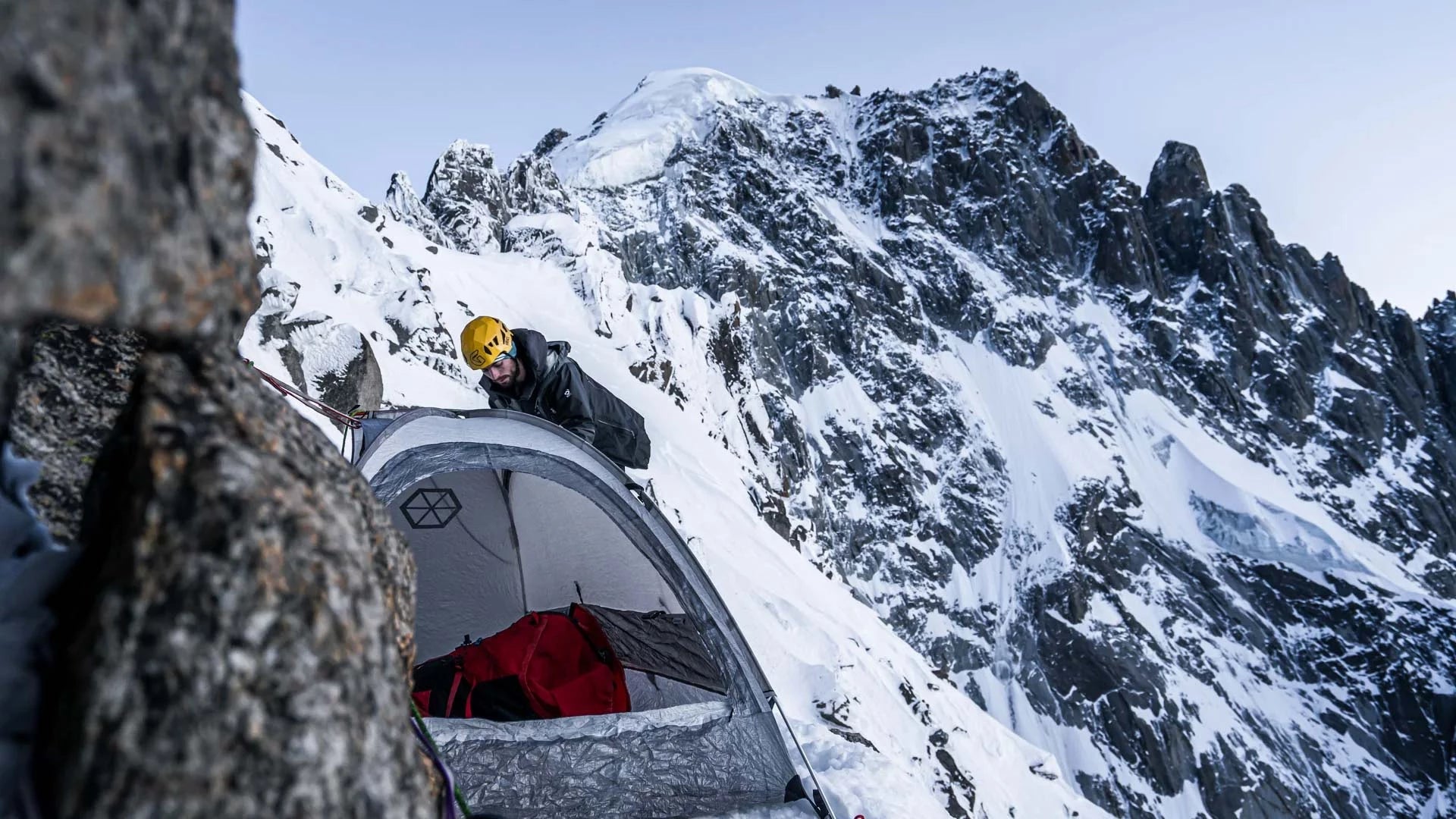
Once you commit to spending time in the mountains, trips often turn into multi-day adventures, as approaches and objectives can take many hours—or even days—to reach. In these cases, camping becomes the only option. You'll need to bring the following gear in addition to your alpine basics and apparel:
- Alpine Backpack - 55L+ (2 days) or 80L+ backpack (3-5 days)
- Climbing Daypack - 25L light summit pack
- Sleeping Bag - down (-5°C)
- Sleeping Pad - lightweight, inflatable & insulated
- Tent - 2-person lightweight & waterproof
- Headlamp - 100% charged with extra batteries
- Water purifying tablets or filter system
Backcountry Cooking
- Cup - Lightweight
- Bowl - Lightweight
- Fork/Spoon (spork)
- Knife - Small folding knife or multitool
- Water Bottles (Ideally, 2 x 1L platypus bottles)
- Stove - lightweight - canister, style (+ lighter)
- Fuel Canisters - 100gm = 2 people for 2 days for overnight trips - Calculate based on trip length
- Cooking Pot with lid + tiny scrubby, 30mls camp -suds
- Bear Spray - depending on the zone
- Trekking Pole
- Food - Dehydrated meals are quick and easy to combine with snacks. Calculate based on trip length

1. Introduction to Mountaineering Course
Crossing glaciers, climbing ridges and sleeping in amazing locations is the name of the game. If you are spending multiple days climbing classic alpine lines you will need to bring the camping, cooking and alpine basics from above plus the mountaineering tools below:
- 1 x Classic Tubular Belay Device - Preferably with an auto-blocking guide mode.
- 1 x Crampon Set (strap-on or pneumatic, fit to boots)
- 1 x Mountaineering Axe - Classic style length to suit your height and terrain
- 1 x Cable Snow Picket
- 4 x Locking Carabiners - round stock HMS style
- 6 x Non-locking Carabiners - 3 straight-gate or wire-gate, 3 bent-gate.
- 1 x Double Length Sling (120cm)
- 1 x Sterling 13.5” Hollow Block Prusik
- 1 x Cordelette (5m x 6mm cord)
- 1 x Lightweight Progress Capture Device (Micro Traxion or Spoc)
- 1 x Emergency Rope Clamp - Tibloc
- 1 x Rope - Single, dynamic, 60m dry-treated Approx 9mm or less

2. Technical Ice Climbing Course
You've mastered rock climbing, and during the winter, you find yourself gazing at the frozen ice formations clinging to the walls as you drive by. It's time to take the next step and learn technical ice climbing. You will need the Alpine basics list and the apparel with extra warm layers and gloves and mitts plus some key technical item below:
- 1 x pair of Ice Climbing Specific Boots - Full shank, stiff with front and heel welts for ice crampons
- 1 x Ice Climbing Crampons - test fitted to boots
- 2 x Ice Tools (with hammers) - Bent shafts for steeper terrain
- 12 x Ice Screws - 2x Red 2x Green 8 x Yellow or Blue (Lengths)
- 2 x Ice Clippers - attached to harness
- Dry-treated Single Rope (60-70m) or twin/half ropes for alpine or multi-pitch
- 1 x Classic Tubular Belay Device - Preferably with an auto-blocking guide mode.
- 4 x Locking Carabiners - 2 HMS (round stock)
- 6 x Non-locking Carabiners - 3 straight-gate or wire-gate, 3 bent-gate.
- 2 x 120cm Dyneema Sling
- 10 x Alpine Quickdraws
- 1 x Sterling 13.5” Hollow Block Prusik
- 1 x Cordelette (5m x 6mm cord)
- 1 x Multi Hook or V-Threading Tool
- Lightweight Knife - Foldable and clip-able
Consider
- GPS or Satellite Communicator
- Avalanche Gear - Beacon, Shovel, Probe
- Personal Effects - Bring tea or warm water in a thermos, snacks or meals, sun cream, any necessary medications, a basic first aid kit, hand warmers, a bivy tarp, and a virtually indestructible ground mat.
Got any questions? Write a comment below or send us an email.


el-cap-freerider/nose list maybe?!!
:)
Leave a comment