





Climbing gear is designed, refined, and redesigned over the years to perform specific functions that climbers know and love: cams protect cracks, ropes protect climbers from falls, and so on.
But the ingenious and curious minds of climbers have a long history of taking climbing tools and using them in totally different, and sometimes surprisingly creative ways. Sometimes with great effectiveness. Other times… well, let’s just say the results are questionable at best.
Here’s our list of 10 effective, and less effective, misuses of climbing gear.
1. ATC Guide as a Wrench
It just so happens that the gap on an ATC Guide is almost identical to the size of a nut on a 3/8" bolt, meaning you can use it to tighten those bolts in an emergency!
Be warned: That steel nut will likely leave marks on your aluminum device.

2. A Rope as a Ground Mat
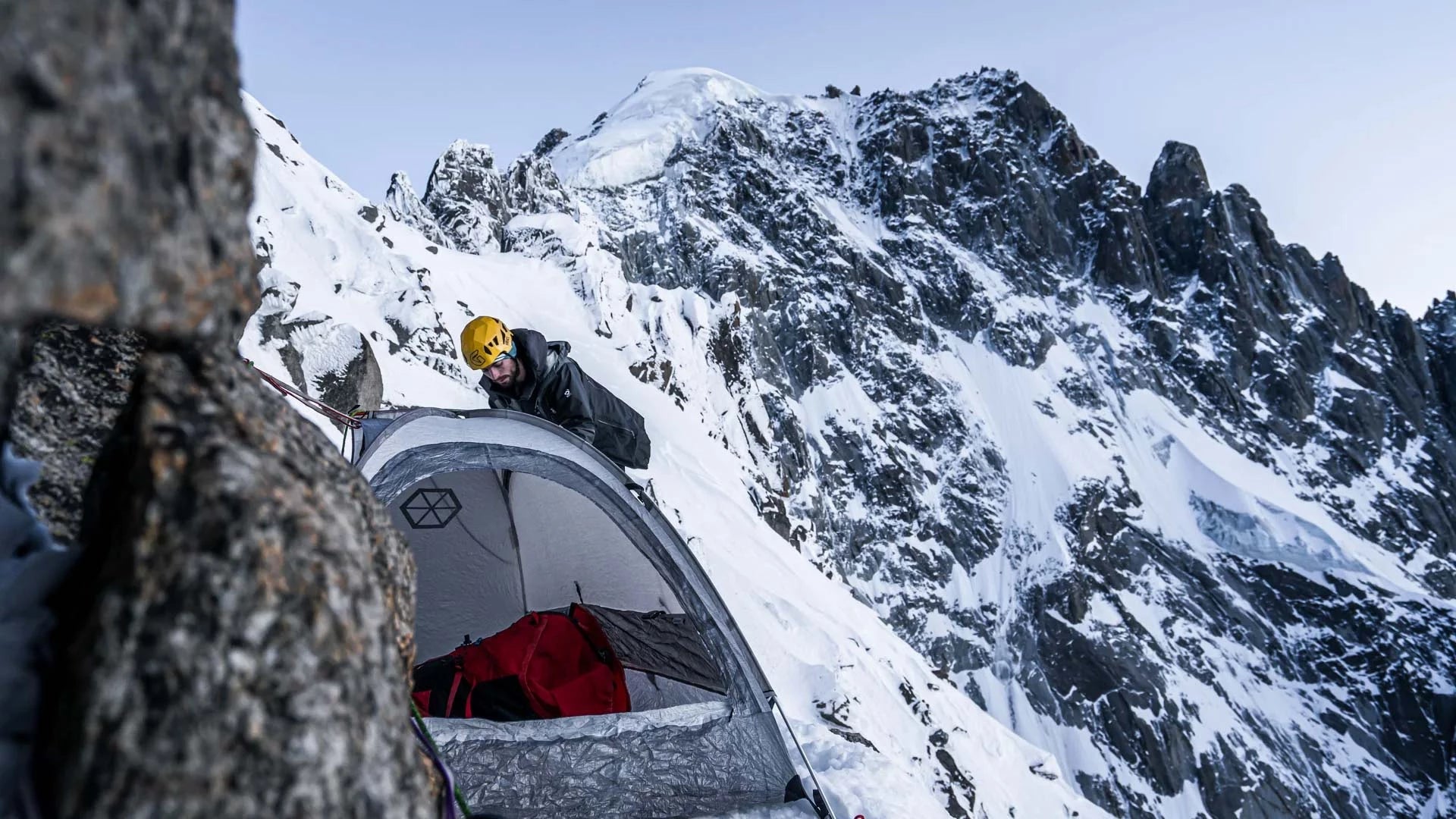
If you have to bivy and need a little insulation from the ground while you survive the night in your shiver bivy with your little spoon, lay your rope back and forth to create a makeshift mat.
It won’t provide much insulation, but it’s better than sleeping directly on the cold ground!
3. Nut Tool as a Beer Bottle Opener
A classic tradition that needs no explanation.
4. Shoelaces as a Knife
Need to cut a rope or sling but don’t have a knife? In an emergency, a shoelace can do the trick.
Remove the lace and pull it tightly against the rope you want to cut. Then pull the lace rapidly back and forth, generating friction and heat that can eventually cut through the rope.
Be warned: This is a last-resort trick, and the shoelace and rope is likely to get pretty chewed up in the process.
5. Climbing Helmet as a Bowl
Add a plastic bag inside your helmet and, presto, you have a makeshift bowl for carrying water or even enjoying a spaghetti dinner.
Cleanup is easy, too: just invert the bag, fold it away, and your helmet is ready for its next pitch!
6. Backpack as a Bivy Bag
If you’re caught out and have to bivy, empty your pack and stick as much of your lower body inside it as possible. It’ll provide a little protection from the wind and weather.
Combine it with a good jacket and trick #2, and you might just make it to sunrise. Just trying to help!
7. Two Non-Lockers
Despite “needing” a locking carabiner for every critical connection, two non-lockers can do the job. Set them up opposite and opposed, and they can provide redundancy at an anchor when you’ve somehow forgotten your trusty triple-action locker.
8. Slings as a Harness
Modern climbing harnesses look fancy, and they can be incredibly light and comfortable, but underneath all that padding and stitching, they’re essentially engineered webbing with padding!
If you ever find yourself without a harness, it is possible, with the right knowledge, to improvise one from slings. It won't be remotely as comfortable as the real thing, but in an emergency, a properly constructed sling harness can get you out of a sticky situation.
Be warned: This requires skills, and if you get it wrong, it can be dangerous.
9. Everything on Your Rack Is a Pull Cord!
If your rope won’t quite reach the next anchor on a double-strand rappel, don’t panic. You may have enough gear on your rack to extend the pull side.
Lower one partner to the next anchor on a single strand. Once they’re safely clipped in, block the other side of the rope at the upper anchor.
Now rappel the long, blocked side of the rope while keeping the short/pull side under control. When you reach the end of the short side, start adding anything you have that can extend it: cordelettes, slings, quickdraws, or whatever else you can safely connect.
Keep building your Frankenstein pull cord until it reaches the lower anchor. Finish the rappel, get safely clipped in, and then pull your bizarre chain of climbing hardware to retrieve the rope.
10. Tape as Sun Protection
UV in the alpine can be brutal, and your nose is one of those unfortunate bits of anatomy that sticks straight out into the sun.
If you need some extra protection, build yourself a tape nose cone. Fold tape back on itself so the sticky sides are together, creating a double layer, then tape it to your glasses.
You won't look cool, but you’ll dramatically reduce the amount of sun reaching your nose. You can extend the technique across your cheekbones or even onto the brim of your helmet for some extra shade.
The downside? You’ll look ridiculous, and you’ll have a sticky mess to clean up later. But at least you won't look ridiculous and have a burnt nose.
Use Your Gear Wisely
Climbers are nothing if not resourceful. Just remember that creative problem-solving should never come at the expense of safe climbing practices. When it comes to critical systems, use equipment for its intended purpose whenever possible.


Leave a comment